Martin Shaw      

civil society/ genocide/ globality/ historical sociology/ IR/ left politics/ Marxism/ media/ risk/ state/ war

at Sussex/ bibliography/ biography/ blog/ reviews/ translations/ the global site

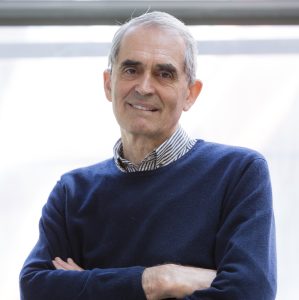
Martin Shaw is a sociologist of war and global politics. He has been professor of International Relations and Politics at the University of Sussex since 1995.

email

see also my archive of political commentary and the genocide blog

Making sociological sense of a key concept 

What is Genocide?

This book proposes a way through the confusion surrounding the idea of genocide: 'a model of conceptual clarity and cogent argument' (Michael Mann). Makes 'genocide a viable category with which to understand perhaps the most disturbing aspects of the past and present world' (Dirk A. Moses)

'There is much to be admired in this book. It is rigorous and robust and puts forth a compelling case. ... Shaw's idea of genocide as a form of warfare ... is rich, compelling and important.' (Alex Bellamy, International Affairs). '

'What is Genocide? is a deep reflection on the theoretical origins and evolution of an essential concept for understanding today’s humanitarian crises. It provides the reader with a reliable overview of the main conceptual approaches in genocide studies, as well as with an inspiring new definition of genocide. Although on occasion its high level of abstraction makes it more suitable for social science students in their final year, it offers insight for scholars and researchers interested in new developments on the field.' - Pablo Veyrat, War and Media Network See also Brian Brivati in Democratiya

Read Chapter 2, Neglected Foundations: Genocide as Social Destruction and its Connections with War


Their risks and ours: the Iraq disaster in perspective

The New Western Way of War: Risk-Transfer War and Its Crisis in Iraq

'The Western way of war, with its deep risk-aversion for its own soldiers and citizens, claims the ultimately impossible standard of "clean" or at least "cleaner" war. Its pretensions to civilian protection are easily represented as hypocritical - its thousands of civilian victims speak otherwise.'

The long war 'The worst danger is probably a sort of extensive (but less intensive) "Israelisation" of the West, or at least of the USA: immersion in many unending, unwinnable if low-level wars, and the corresponding brutalisation of state and society. ... The temptation for leaders like Bush may be to go, as the Israeli regime has gone, down this road of permanent war. In this case, the 'rules' will change: although war would still be combined with 'normal' life, the permanent war situation will bring depressing new realities to Western societies. ... The failure in Iraq is perhaps the last opportunity to reassess the situation and avoid not so much another Vietnam as a global Palestine.'

Written in 2004 and published in 2005, events since have only made this critique more relevant. Read the concluding chapter, 'A way of war in crisis'/ Martin Woollacott's Guardian review/ War and Media review/ interview with Martin Shaw by Alan Johnson/ order the book

Italian translation, L'Occidente Alla Guerra, published by EGEA Bocconi University Press, 2006

textbook

War and Genocide A critical introduction to war and genocide studies (2003); breaks new ground in systematically linking the two fields: 'very suitable as an undergraduate textbook. It is also written in a very direct and admirably accessible style ... . Reading Shaw's book is a pleasure, even though its topic is far from pleasant.' - Australian Journal of Political Science. 'The book contains a unique narrative regarding the relationship between war and genocide.' - Social and Legal Studies.

Read a key chapter, Genocide as a Form of War, or for fuller information click on the cover>

 a book that rewrites the globalization debate

Theory of the Global State  Globality as Unfinished Revolution (2000). Read Chapter 1 or order the book.

'Theorizing globalization without the state is like playing Hamlet without the Prince, as Martin Shaw nicely puts it. ....  The debate becomes trapped in this stale dilemma of globalization versus the nation-state. Shaw’s identification of this trap and his insistence on the need to escape is useful and timely.' Leo Panitch

'This notion of a global state is an interesting idea and it is clearly defined in a thoroughgoing critique of international relations theory. The key problem with it is whether it is at all plausible. I think not.' Paul  Hirst  


key research

Civil Society and Media in Global Crises Representing Distant Violence ( 1996)

'Martin Shaw is, somewhat inexplicably, the first scholar to turn his attention to the Iraqi Civil war of 1991, which began a few days after the end of Operation Desert Storm. Shaw's primary interest is in how civil society - particularly the press - "represents" distant events. .. His choice of focusing primarily (though not exclusively) on the Kurdish exodus, which involved some 2 million people, is noteworthy because it the only substantial work that traces the first two months of the Iraqi Civil War and its aftermath and seeks to determine whether the media may have had an effect on the decisionmaking process of the British executive. The citation and research is excellent. Its primary flaw is that the study overreaches its conclusions. On the whole, however, a valuable argument, a highly worthy subject matter, and extremely well cited for use by interested researchers.' Derek Miller             

Read Part III, From managed media to active representation: the Gulf War and the Kurdish refugee crisis or order Civil Society and Media in Global Crises.

Post-Military Society Demilitarization, Militarism and War at the End of the Twentieth Century (1991). The sociology of contemporary militarism. For sale direct from this site at a reduced price.

two seminal works - read the full texts online 

Dialectics of War  An Essay of the Social Theory of War and Peace ( 1988). This pathbreaking work challenged the mutual neglect of strategic and social theory. In a historically based argument, it proposed that we need to examine the inner workings of warfare as a social arena, and advanced the arguments for historical pacifism.

Global Society & International Relations  Sociological Concepts and Political Perspectives ( 1994). One of the first books to fully present the challenge of globality to IR. Includes chapters on global society; Giddens' state theory; security - critique of Buzan, Booth, Waever; international society theory; etc.     


Professor Martin Shaw, International Relations and Politics, University of Sussex Brighton BN1 9SN, England. tel. (+44) 1273 678032

copyright notice Writing on this site is © copyright Martin Shaw 2005 and may be used only for the purposes of personal study; for permission to reproduce contact me as above.

updated 22 October 2006

Site Meter